
Electrical Wiring Diagrams — Ford Model T
The Model T’s electrical system evolved over its production run. Pre-1915 cars used acetylene (gas) headlights and an oil tail lamp — only the ignition system was electric. From 1915 the headlights became electric (still magneto-powered, no battery). From 1919 a battery, generator, and Bendix-drive starter became optional, and by 1926 they were standard. The two diagrams below cover the magneto-only eras — later battery/starter-equipped cars differ.
Click any image to view full size.
Pre-1915 Ford Model T — Magneto Ignition Only
The earliest Model T electrical system: the flywheel magneto powers the ignition circuit only. Acetylene gas lamps provide headlight illumination (not shown in the diagram) and there is no horn circuit shown for the very earliest cars — brass-era T’s used a hand-operated bulb horn. The timer (commutator) on the front of the engine routes current to the four ignition coils in the firing order 1–2–4–3.
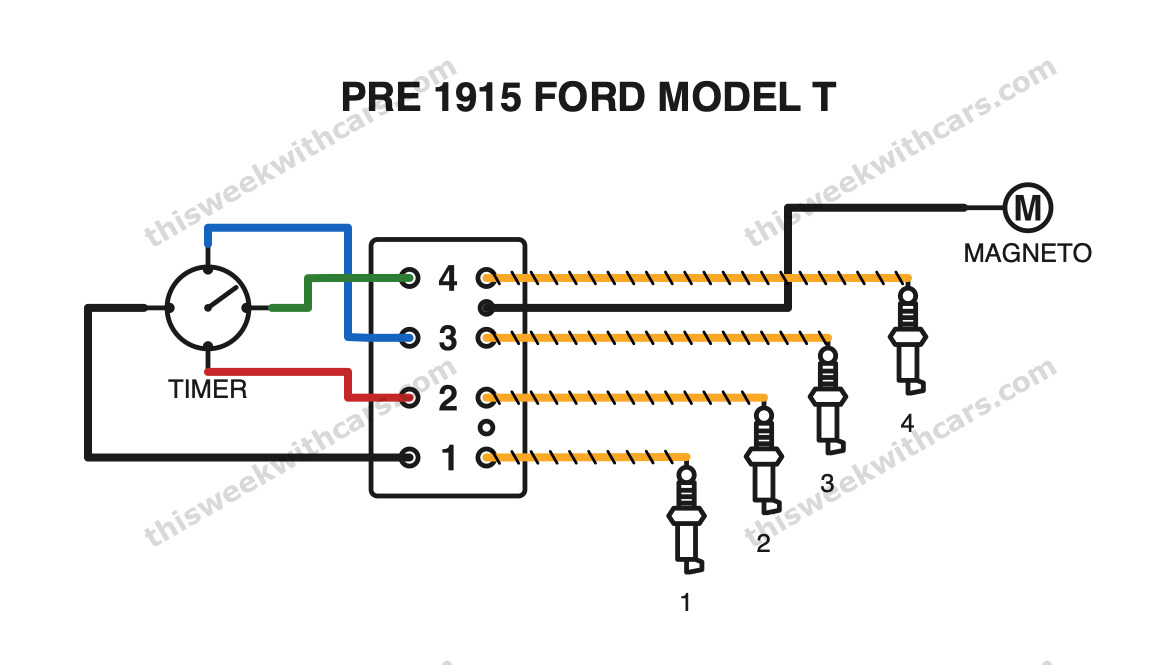
Fig. 1 — Electrical Wiring Diagram, Pre-1915 Ford Model T (magneto ignition only)
1915–1916 Ford Model T — Magneto with Electric Headlights
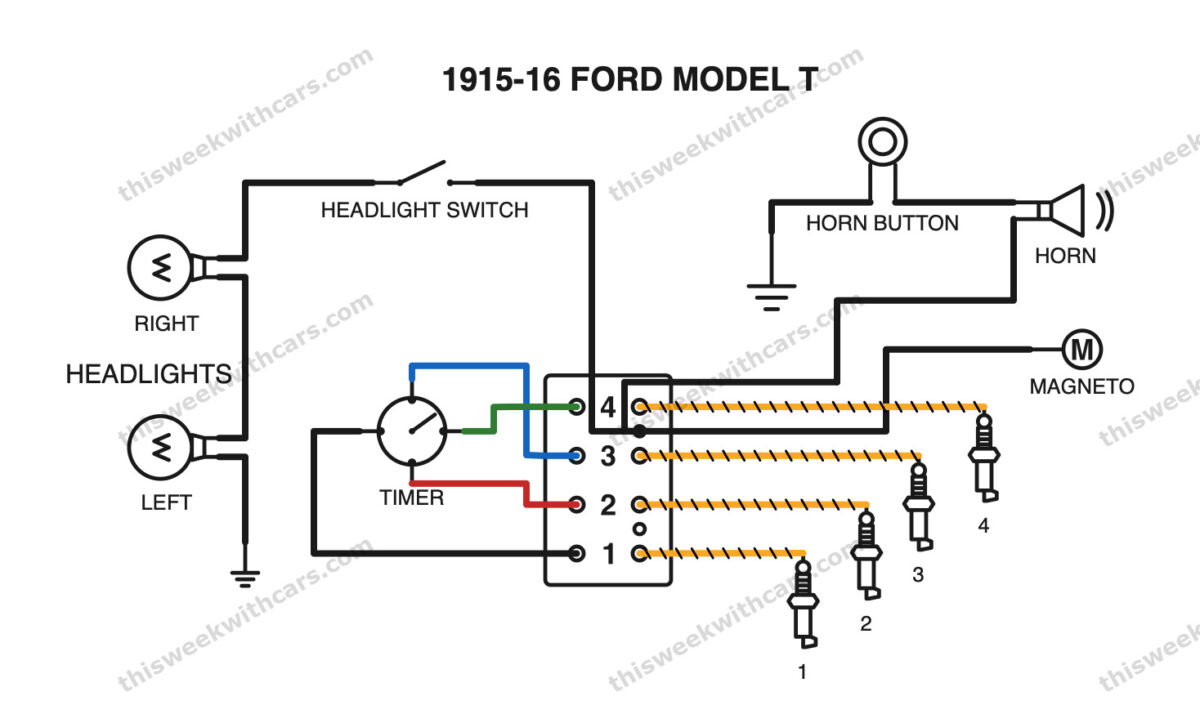
From 1915, electric headlights replaced the acetylene system, still powered by the flywheel magneto with no battery on board. The headlight switch is wired in series between the magneto and the headlight bulbs; the vibrating horn is operated via a horn button with its own ground return.
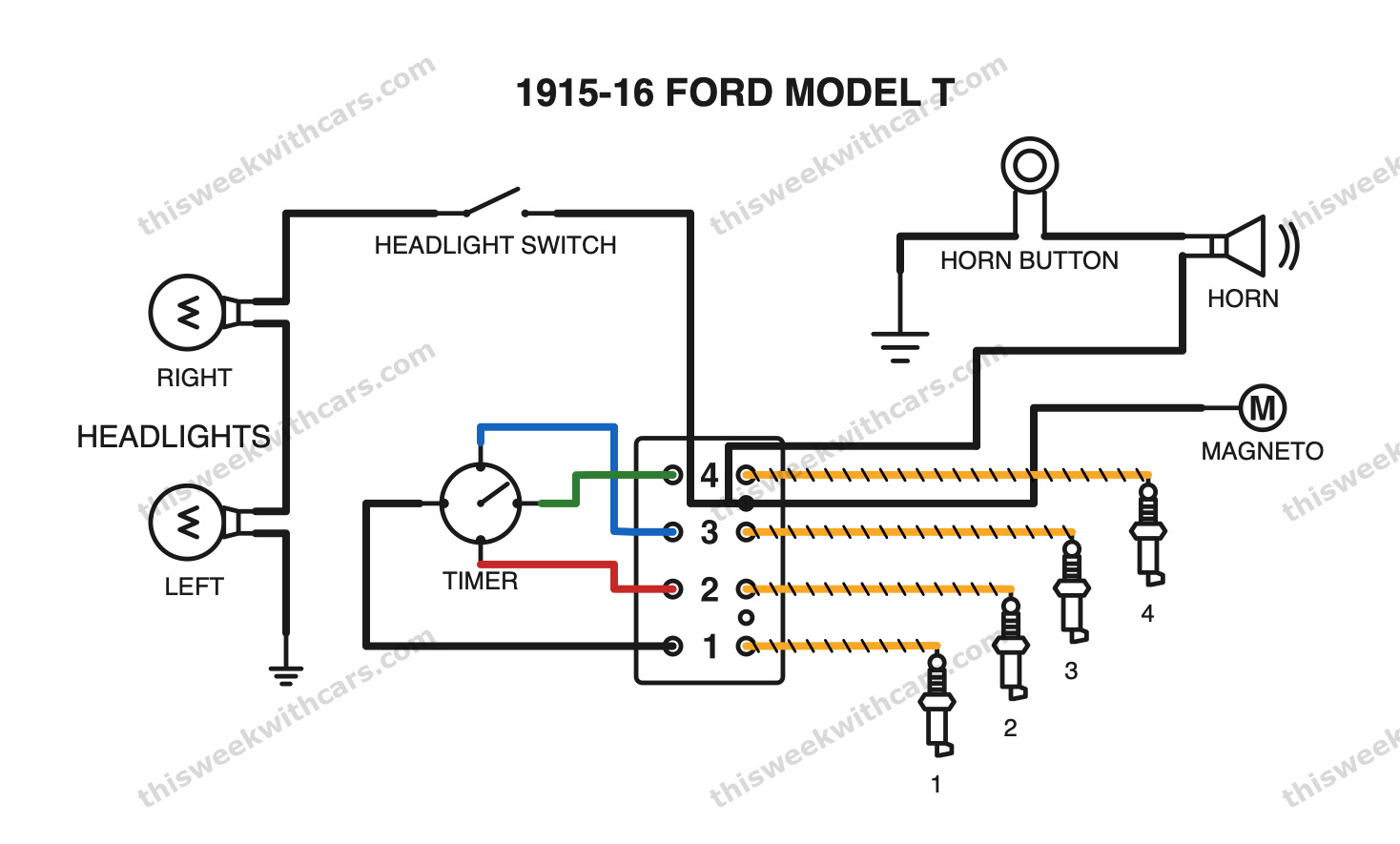
Fig. 2 — Electrical Wiring Diagram, 1915–1916 Ford Model T (magneto with electric headlights)
From 1919 onwards, Model Ts could be ordered with a battery, generator, and Bendix-drive starter motor; from 1926 these became standard equipment. The wiring on later cars therefore differs significantly from the magneto-only diagrams above — see the General Data page for the 1926–27 electrical specifications.